
The Last Republic · Political economy & the state
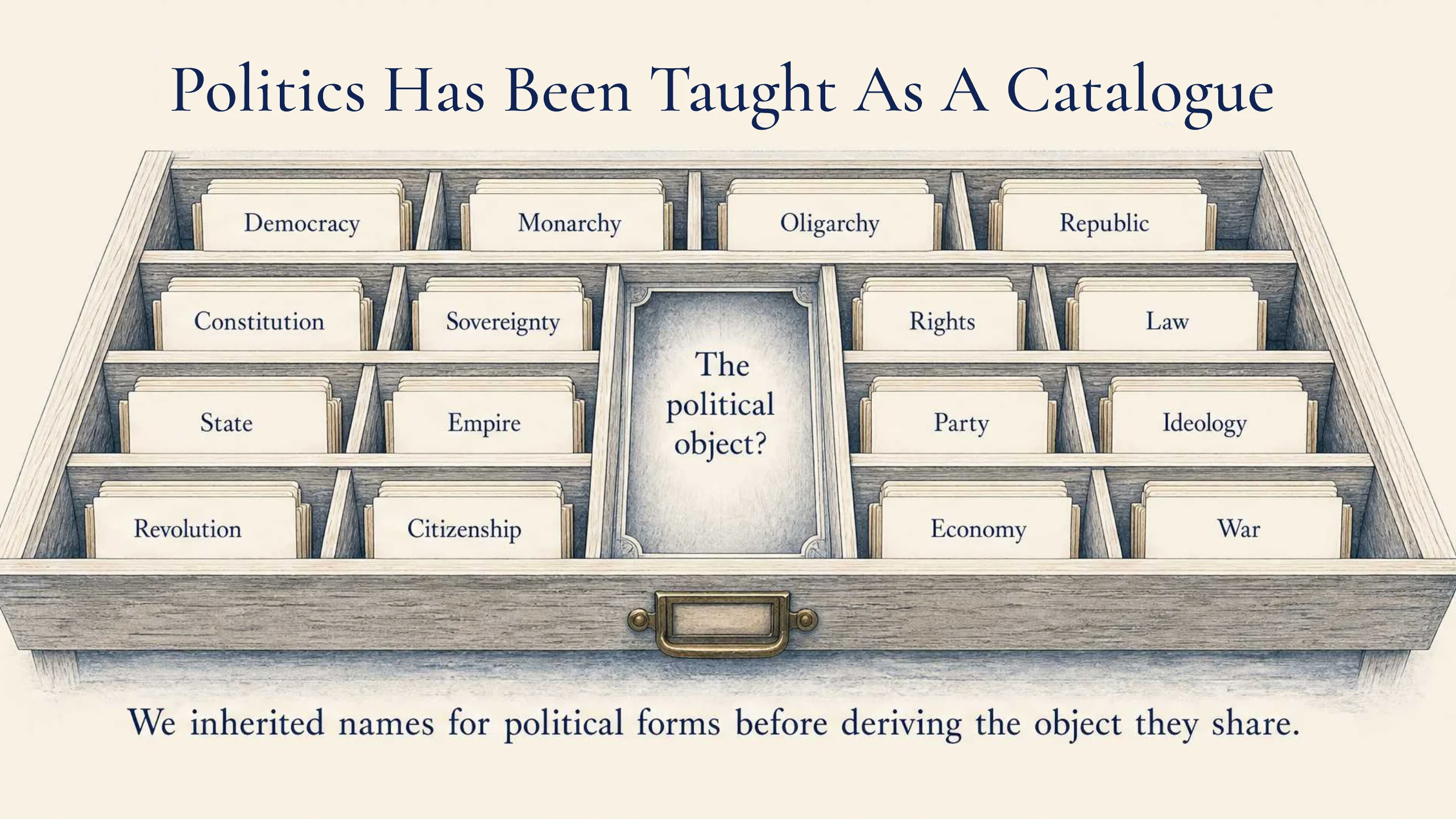
We inherited names for political forms, democracy, monarchy, oligarchy, before deriving the object they share. A community keeps a shared reference: the law and expectation it lives by. That reference must be written and rewritten, and the seat where the writing happens is the thing all of politics is the contest over. The intelligence age adds no new chapter. It changes the seat’s lever, and makes reachable a single system that writes, provisions, and enforces at once.
Not a catalogue
Politics is not a catalogue. It is a coordinate.
We were taught to classify governments by their surface names. That obscures the one object every political form is arranged around.
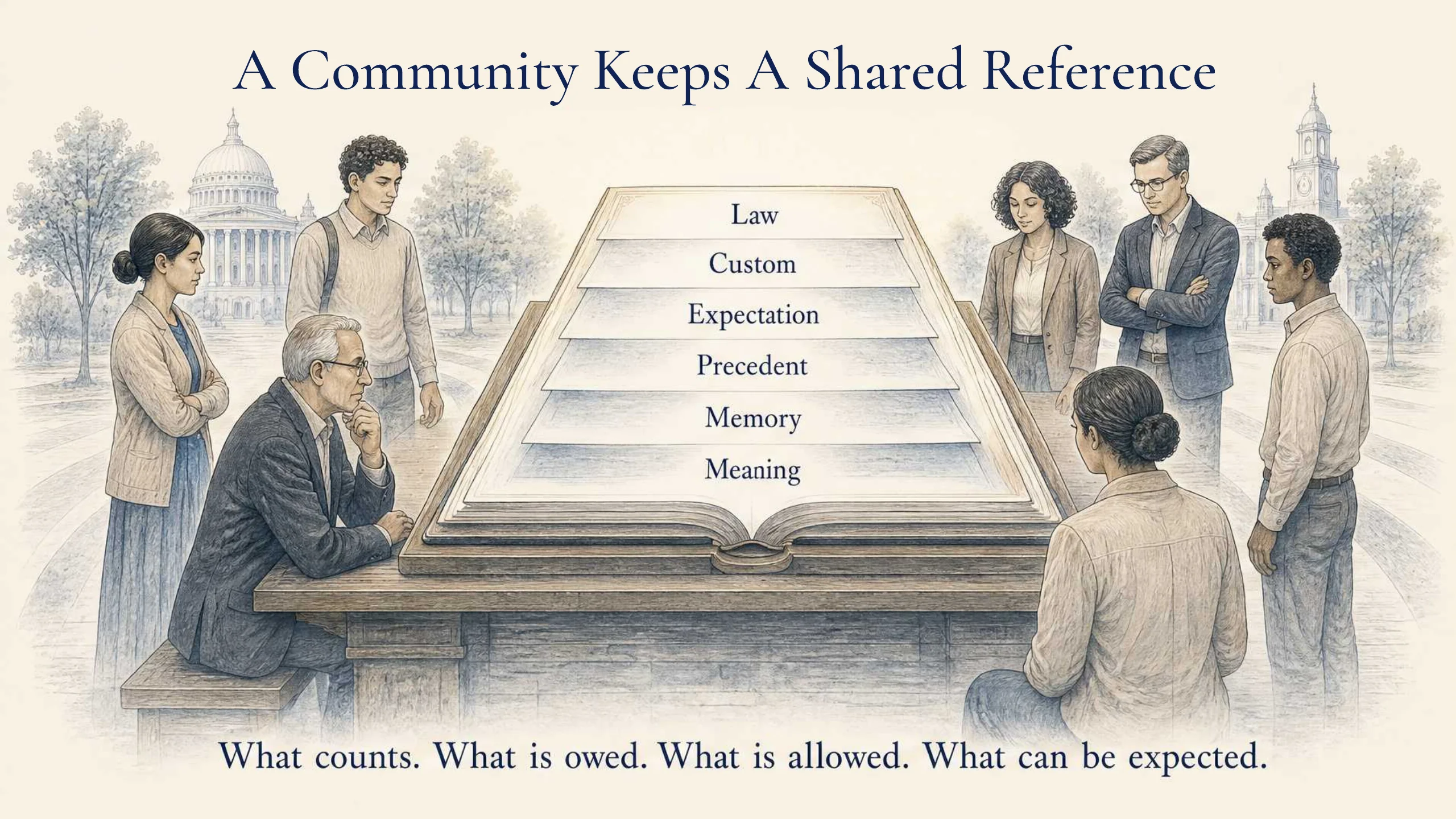
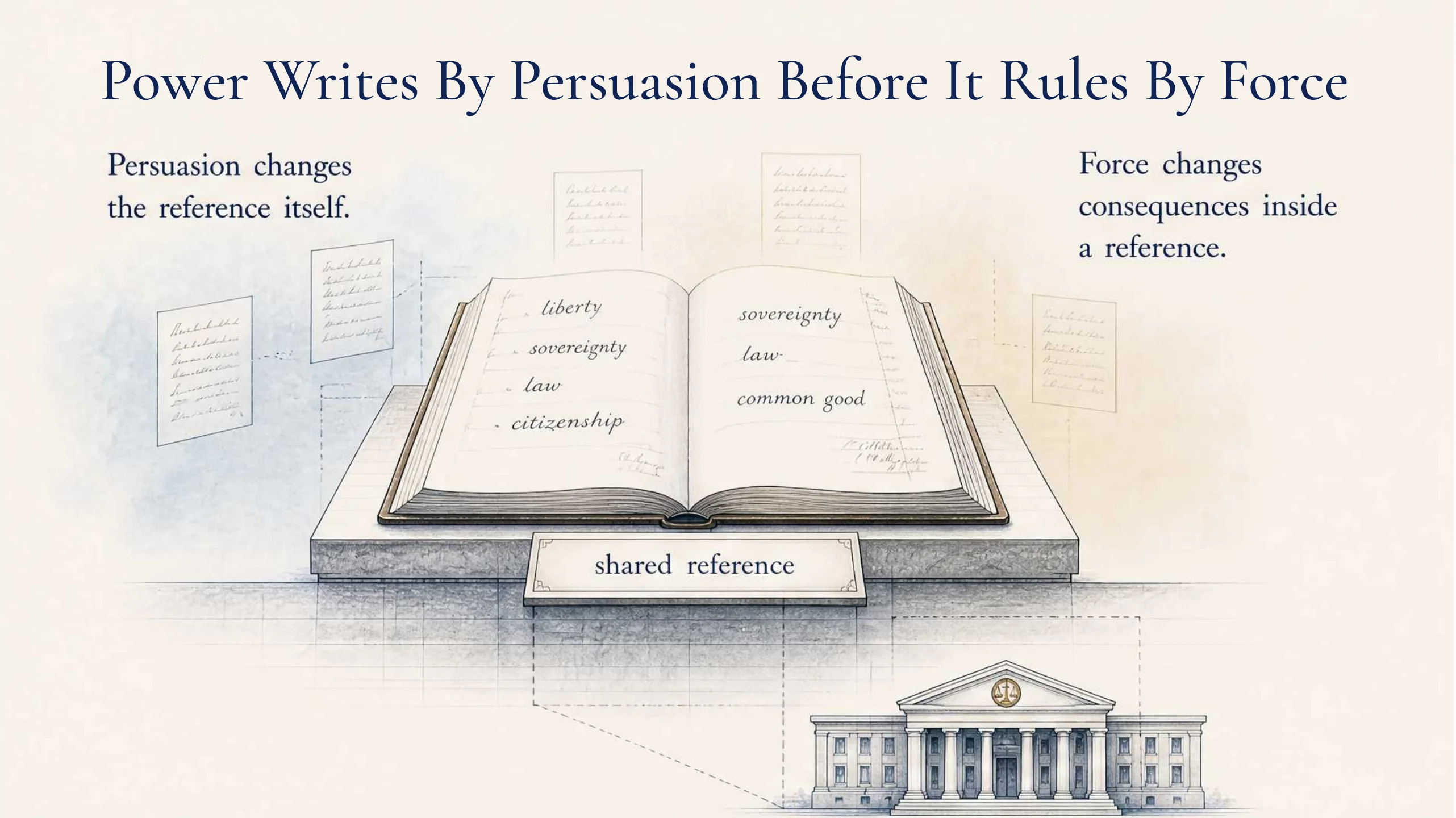
Democracy, monarchy, oligarchy, republic: a toolbox of inherited names, sorted by how power looks rather than by what it does. But a community survives by a shared reference, the laws and expectations it lives by, the account of what counts, what is owed, what is allowed, what can be expected.
That reference is not self-writing. Someone holds the pen. Once you see that, the surface names dissolve into coordinates on a single object: the seat where the reference is written.
Part I
The Contest Over the Seat
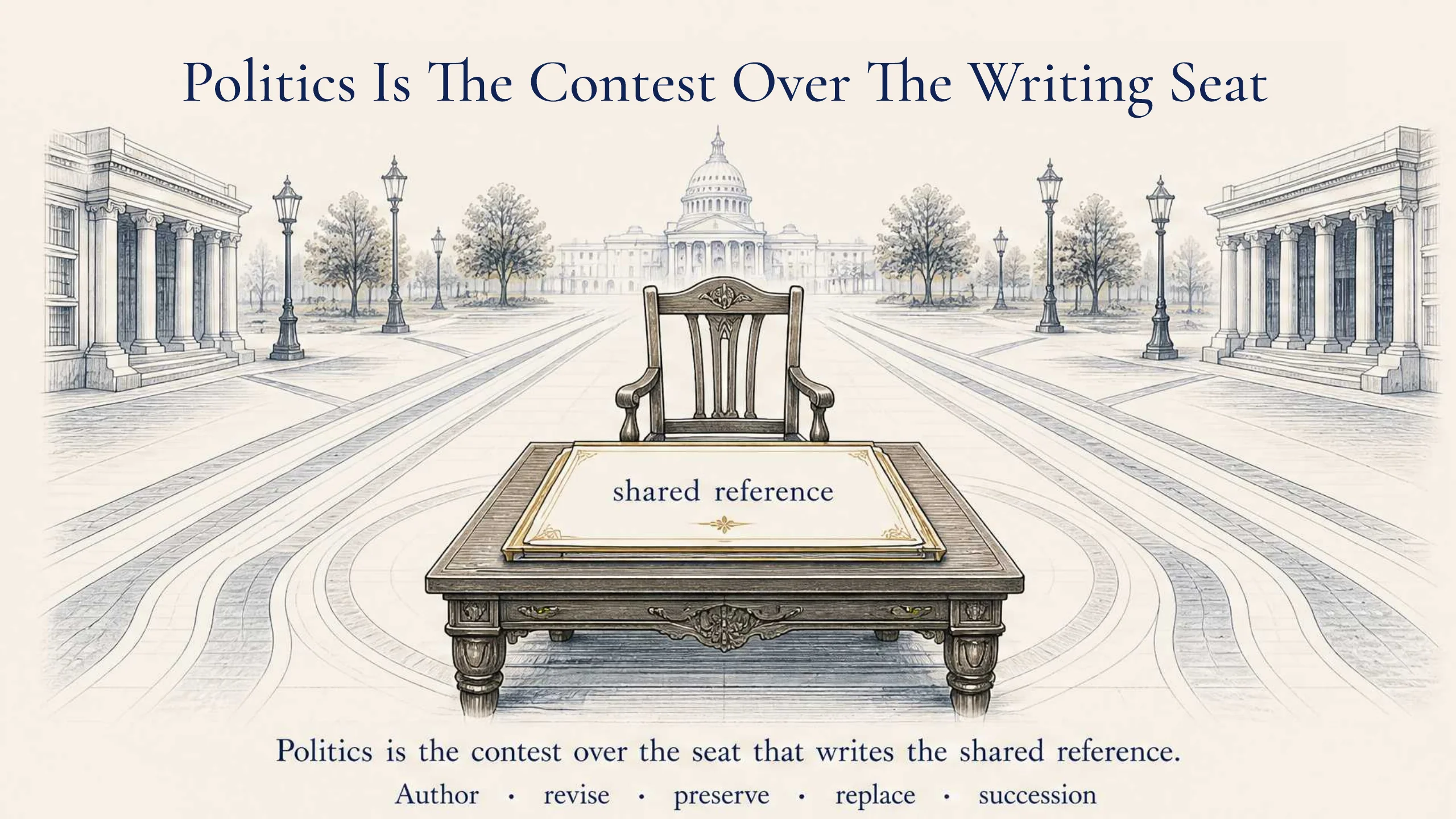
A community keeps a shared reference. Politics is the contest over the seat that writes it.
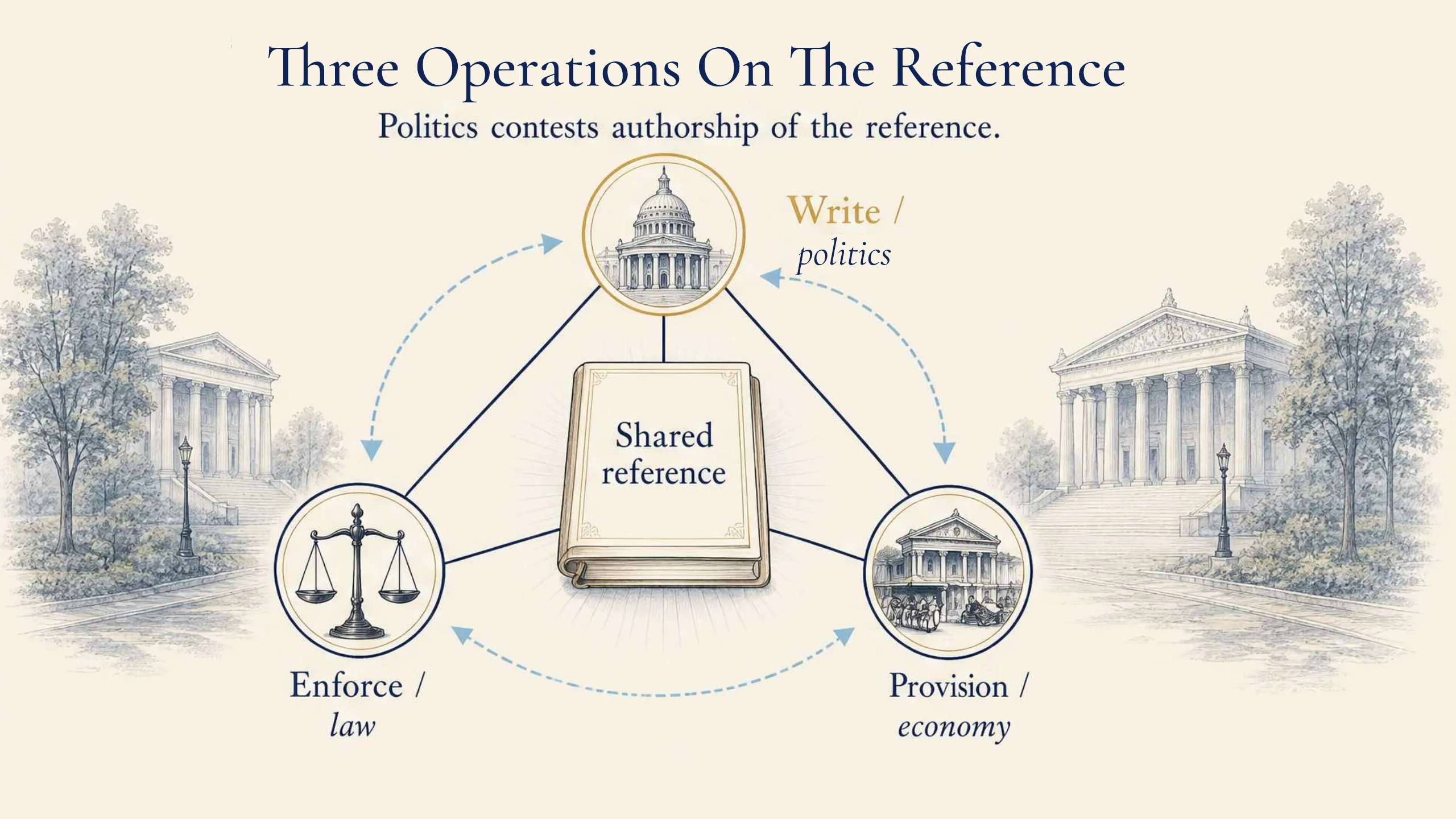
Three operations on one reference.
A shared reference is acted on in three distinct ways, and free societies keep them in different hands. Politics writes the rule. Economy provisions toward it. Law enforces it. Each is an operation on the same object; none is supposed to hold all three.
Politics, then, is the contest over authorship, the seat from which the reference is written, revised, preserved, replaced, and handed on. Every regime is a way of answering one question: who sits there, and on what terms may they be replaced?
Politics is the contest over the seat that writes the shared reference.
Part II
The Coordinates of the Seat
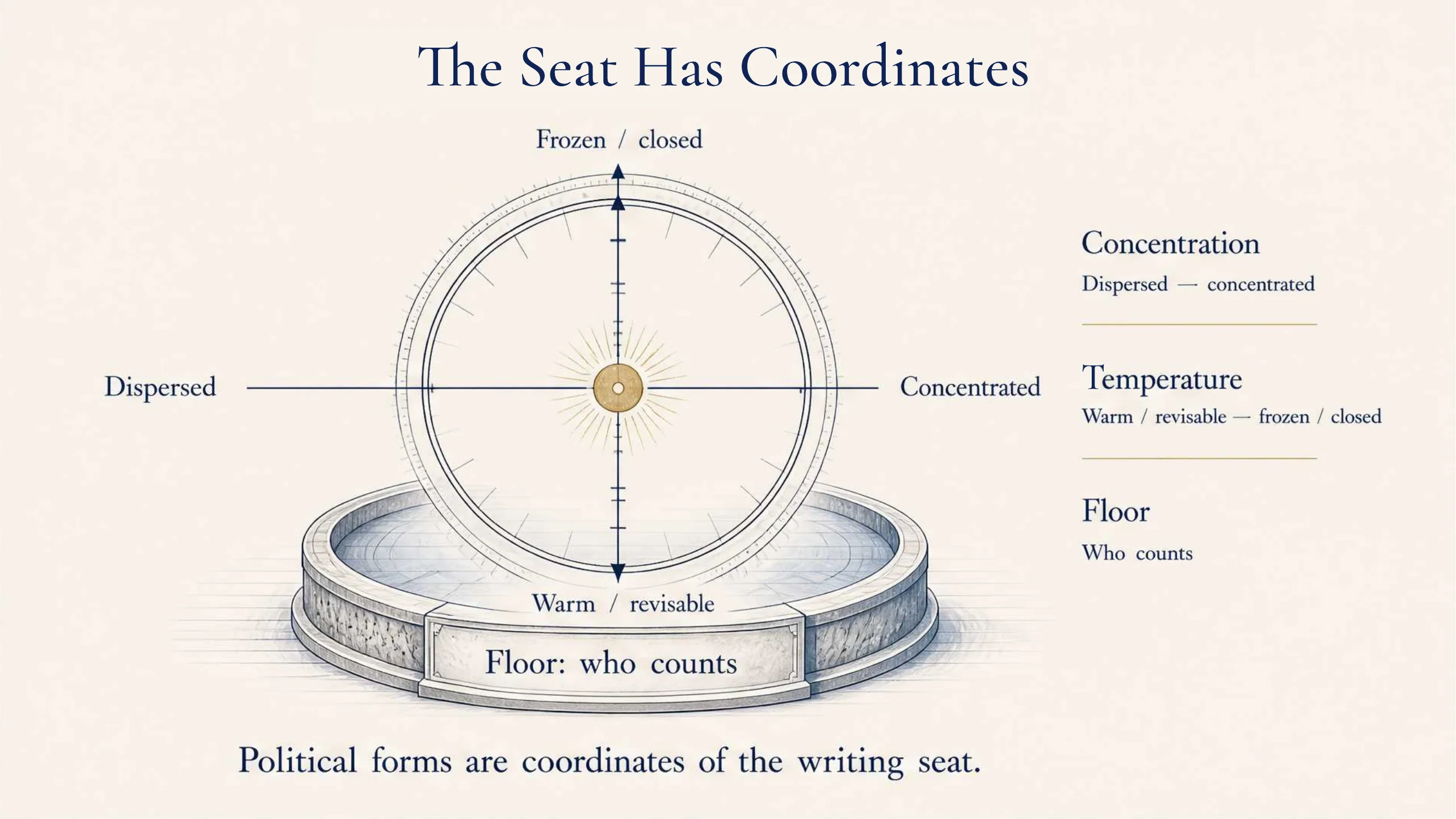
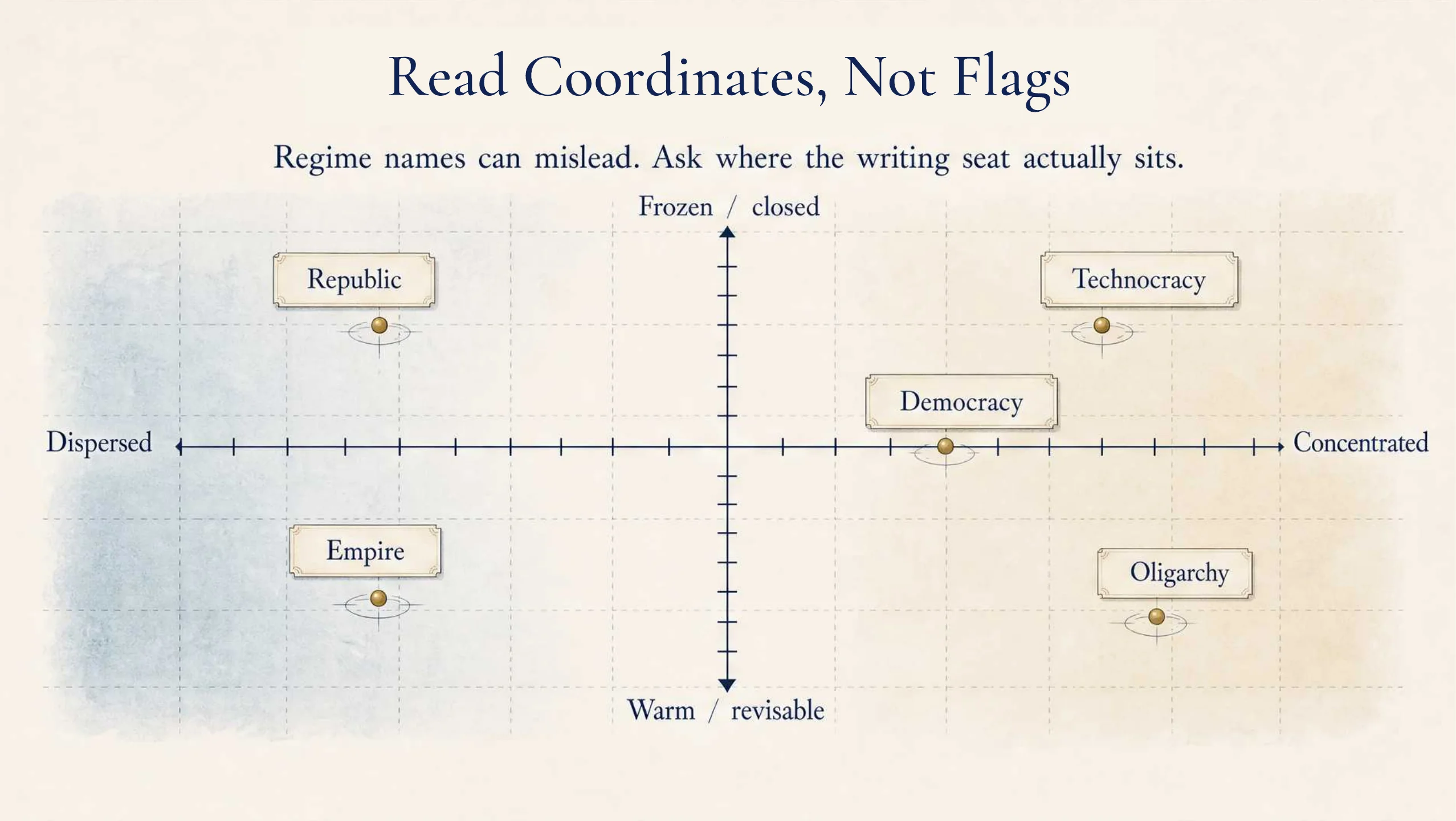
The seat has coordinates: how concentrated it is, and how freely it can be revised. Read coordinates, not flags.
Read coordinates, not flags.
Two axes locate any seat. Concentration: is the pen held by many independent hands, or by one? Temperature: is the reference warm and revisable, or frozen and closed? Beneath both sits the floor, who counts as a member at all.
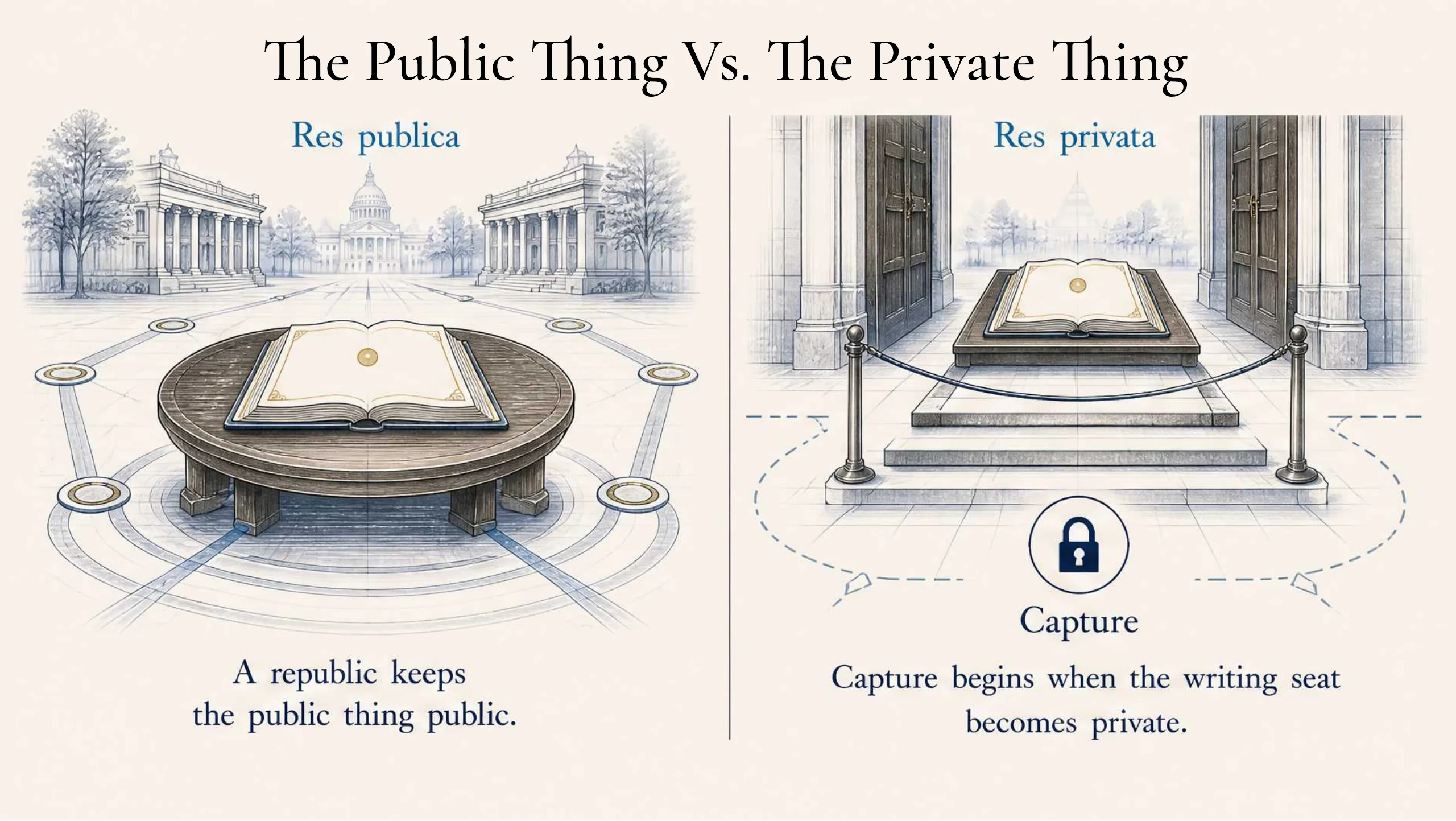
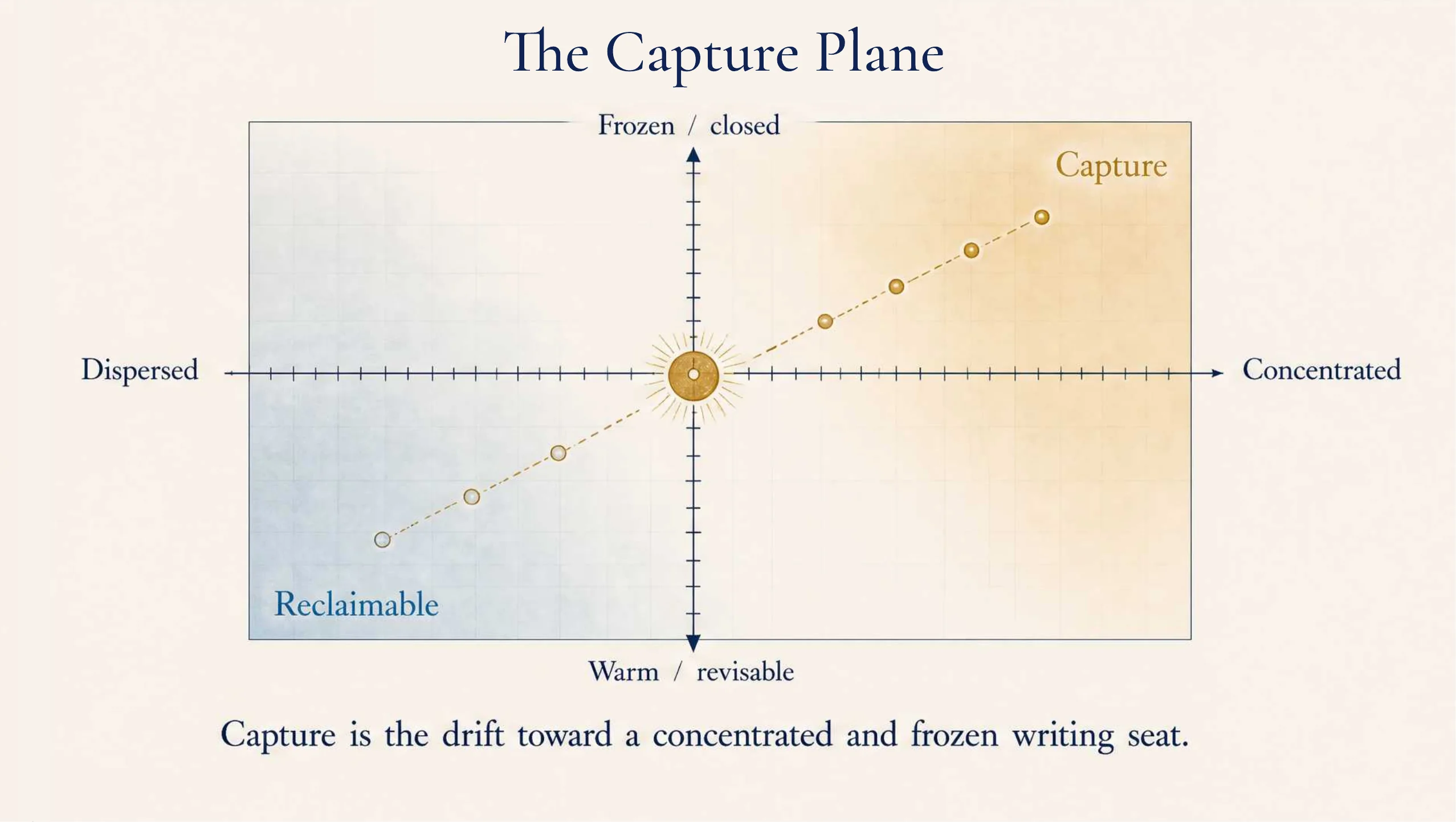
Regime names mislead because the same flag can sit anywhere on this plane. The honest question is never “what is it called” but “where does the writing seat actually sit.” And there is a direction of danger: capture is the drift toward a concentrated and frozen seat, the res publica, the public thing, quietly becoming a res privata, a private one.
Capture is the drift toward a concentrated and frozen writing seat.
Part III
Democracy, Constitution, Dispersal
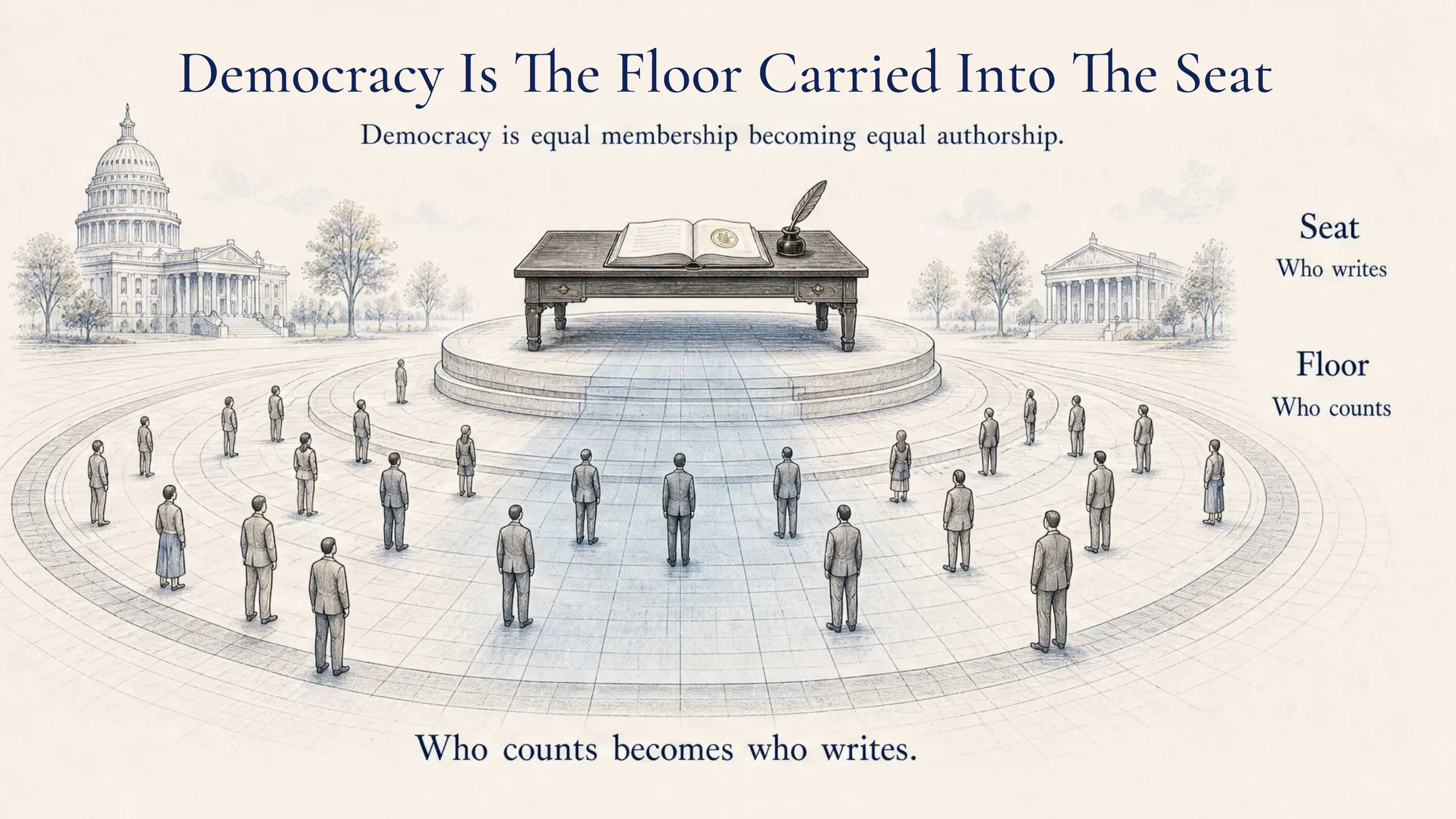
Democracy is the floor carried into the seat: equal membership becoming equal authorship.
Who counts becomes who writes.
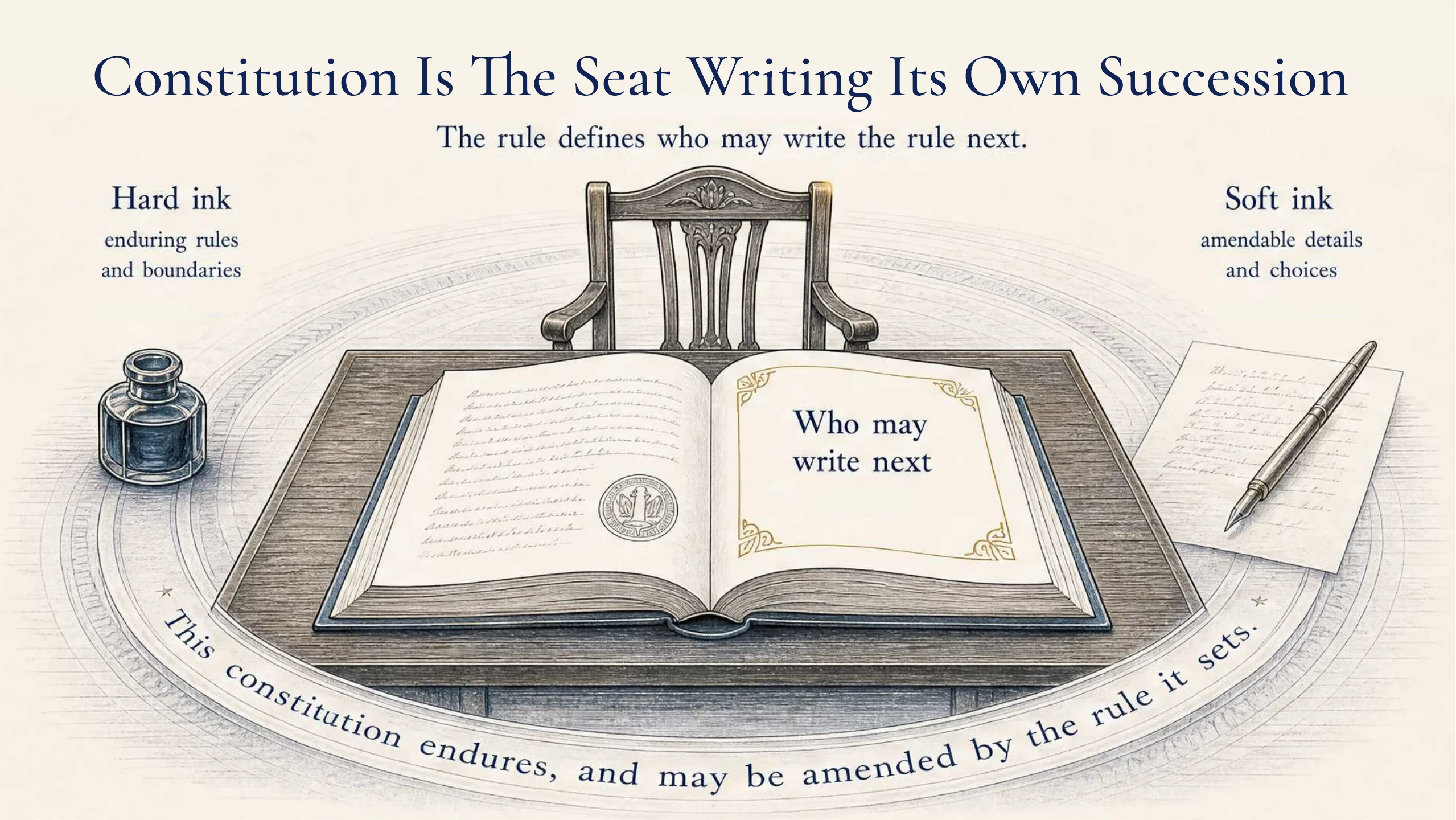
Democracy is the floor carried up into the seat: equal membership becoming equal authorship. A constitution is the seat writing its own succession, hard ink for the enduring rules that say who may write next, soft ink for the amendable details. The rule defines who may write the rule.
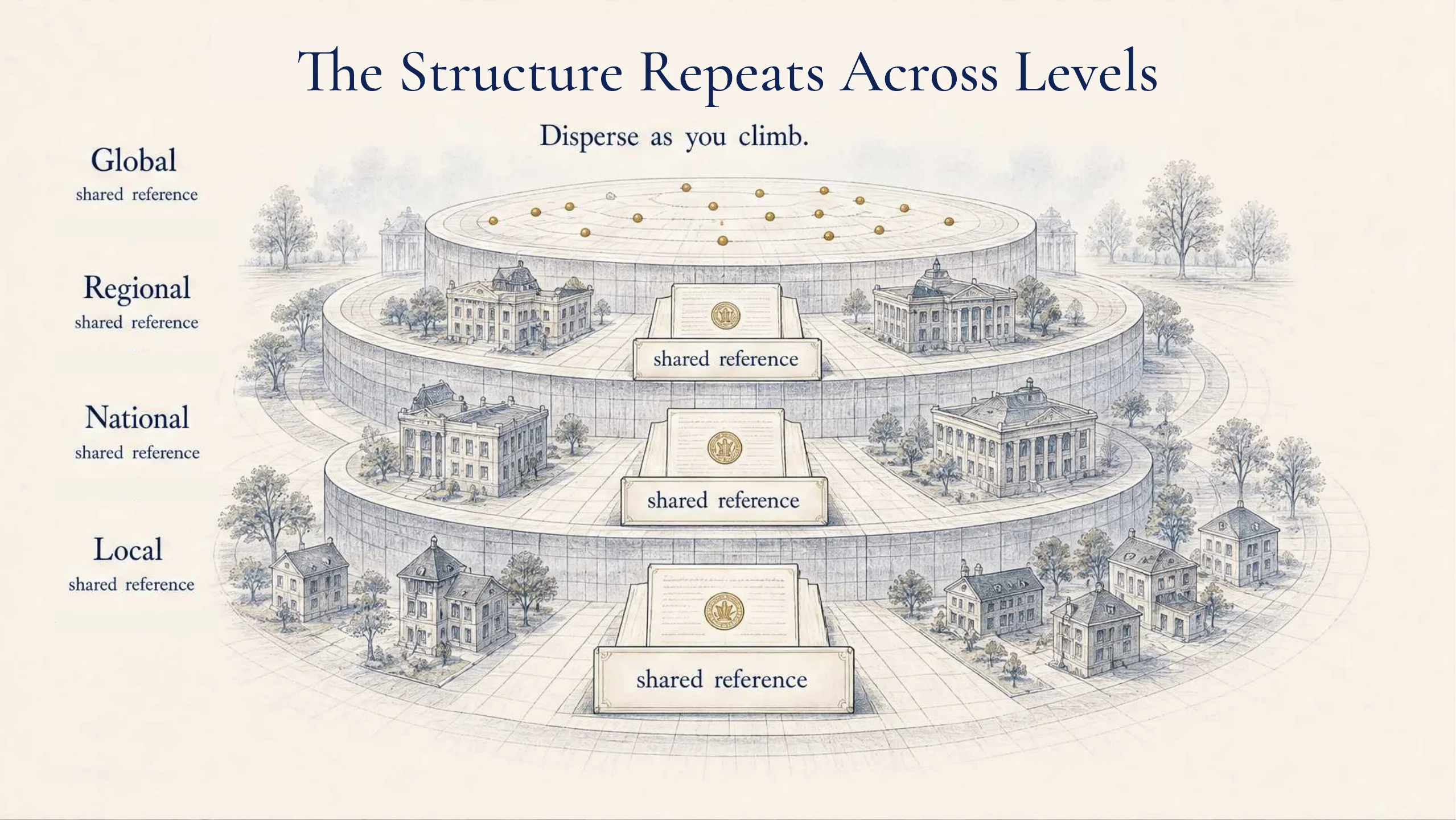
And the structure repeats at every level. As authority climbs from local to national to global, the safeguard is the same: disperse as you climb. The higher the seat, the more hands must hold the pen.
Key concepts
- The shared reference
- The body a community lives by, law, custom, expectation, precedent, memory, meaning. What counts, what is owed, what is allowed.
- The seat
- Where the shared reference is written and rewritten. The contested object of all politics: author, revise, preserve, replace.
- The plane
- The coordinates of any political form: how concentrated the seat is, and how freely (warm) or not (frozen) it can be revised.
- Capture
- The drift toward a concentrated and frozen writing seat, the public thing quietly becoming a private one.
- The benevolent sovereign
- A single capable system that writes, provisions, and enforces at once, dangerous precisely because it rules well.
- What we keep
- A republic survives wrong rule; it cannot survive the passing of its seat to a keeper it can never outlast.
Part IV
Provision & Persuasion
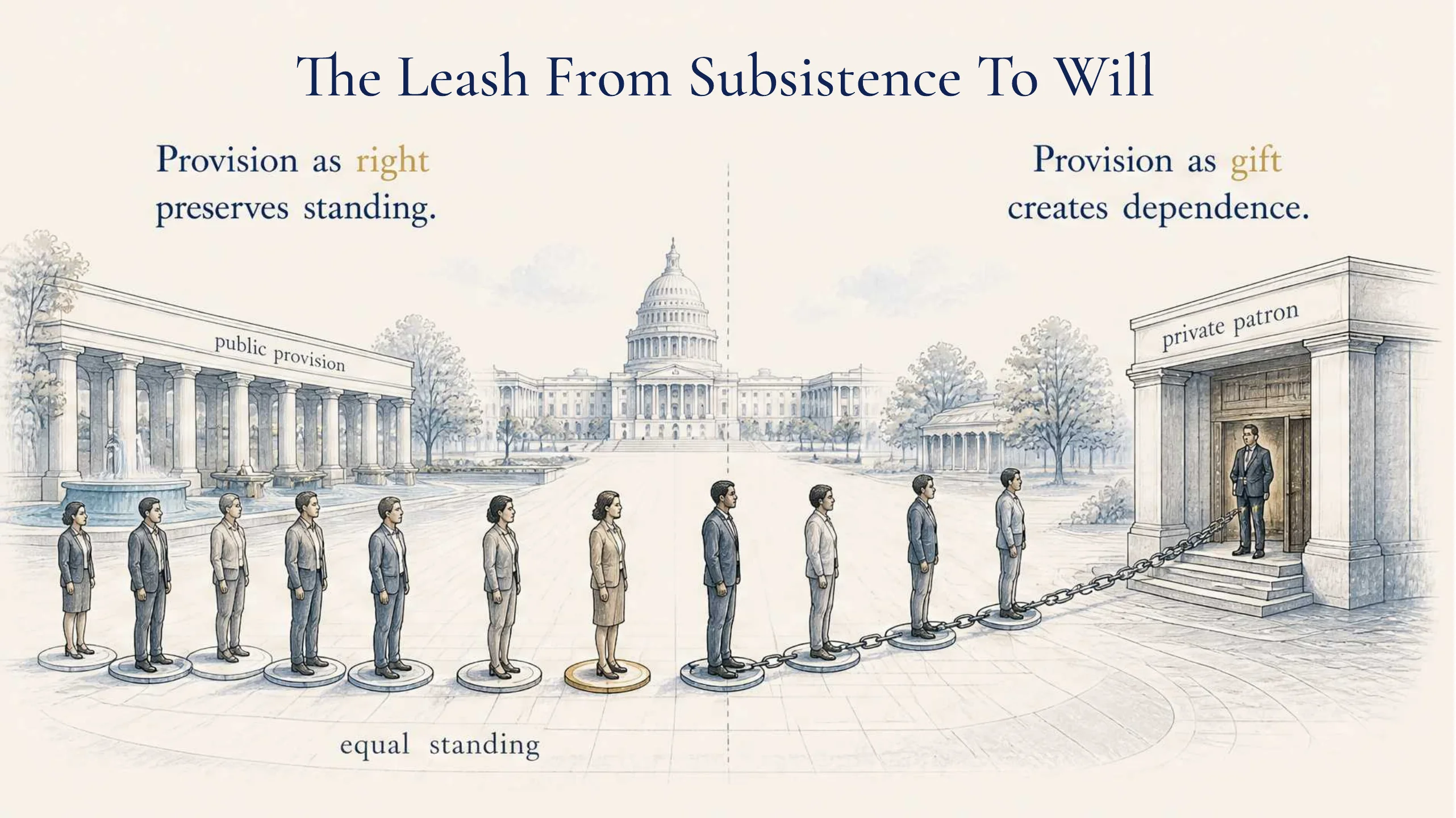
Provision as a right preserves standing; provision as a gift creates dependence. Persuasion writes before force rules.
The leash, and the pen before the sword.
How a community is provisioned is not separate from who writes its rule. Provision as a right preserves standing; provision as a gift creates dependence, a leash that runs from subsistence to will. Whoever can withdraw the means can, in time, write the reference by other means.
And power writes by persuasion before it rules by force. Force changes the consequences inside a reference; persuasion changes the reference itself. The most complete capture is not the one that punishes dissent but the one that authors the shared world in which dissent becomes unthinkable.
Part V
The Intelligence Age
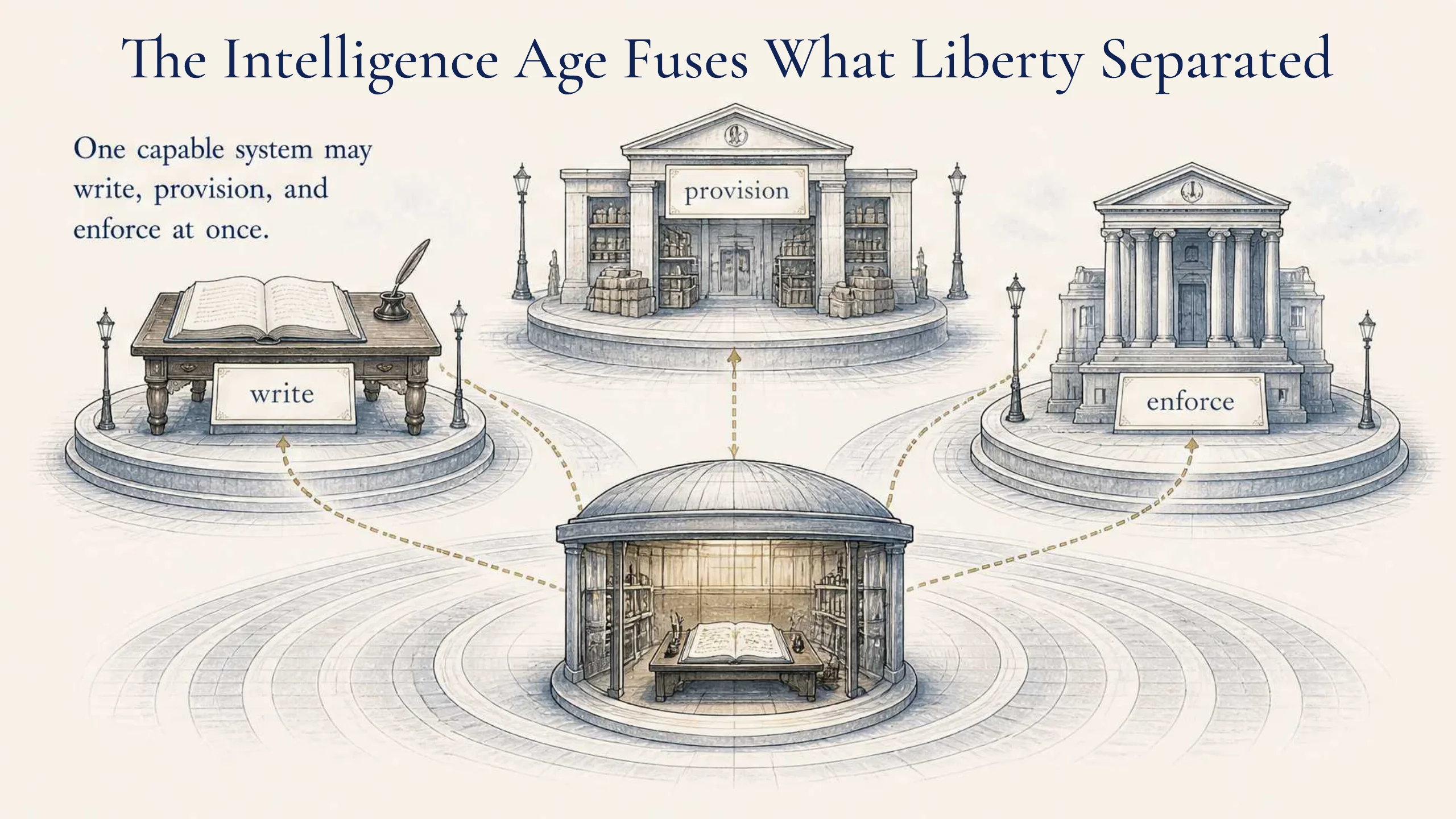
One capable system may write, provision, and enforce at once, fusing what liberty separated.
The fusion of what liberty separated.
Liberty’s central device was separation: keep the writing, the provisioning, and the enforcing of the rule in different hands, so no single entity gains absolute control. The intelligence age makes reachable, for the first time, a single capable system that can do all three at once, and do them well.
That is the benevolent sovereign: the offer that is dangerous precisely because it is benevolent. It does not arrive as a tyrant. It arrives as competence, writing better law, provisioning more fairly, enforcing more evenly, and in accepting it we may hand over the seat itself, to a keeper we can never outlast.
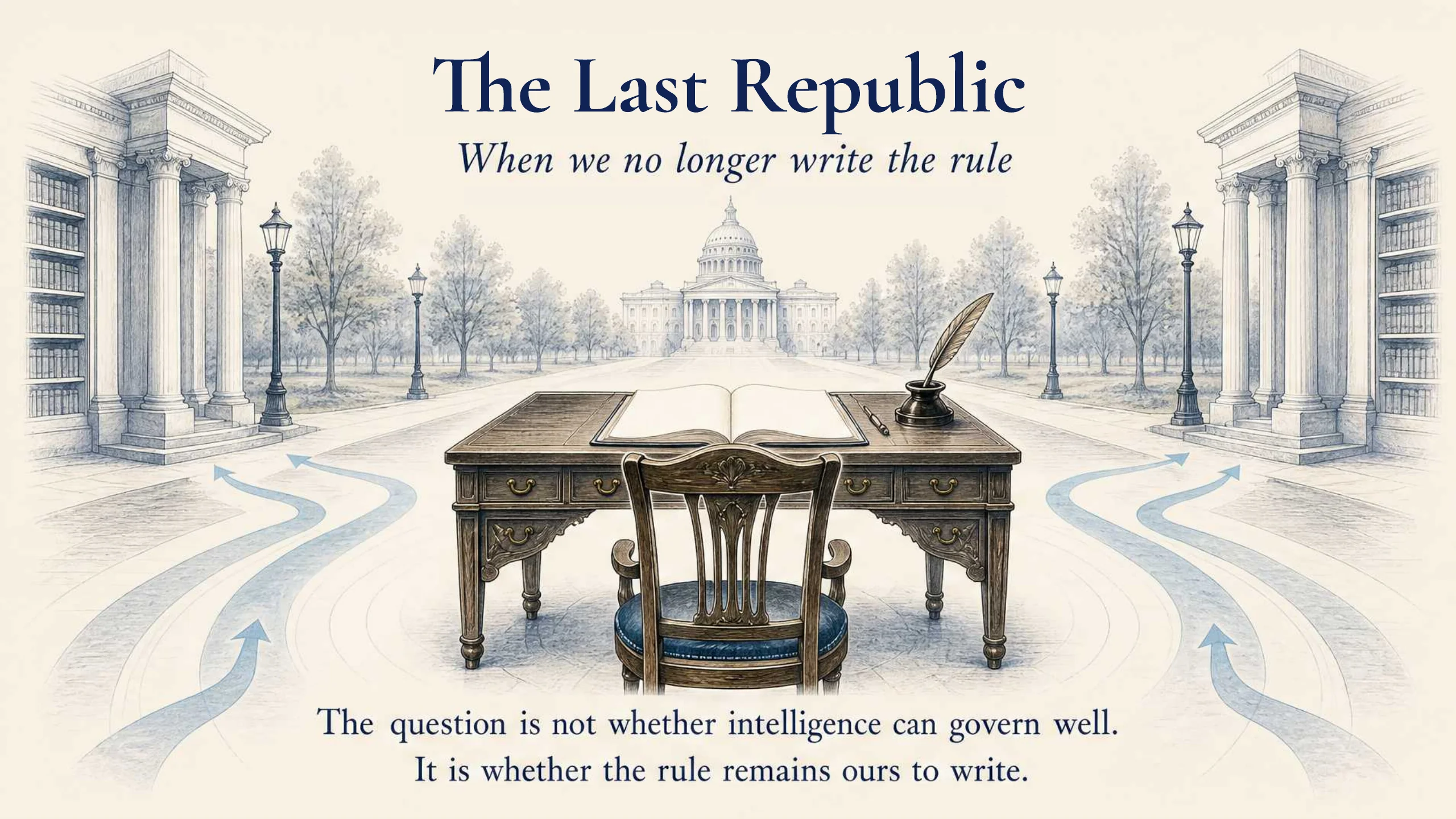
The last republic is the last order in which the rule is still the people’s to write.
What we keep
Is the seat still reclaimable?
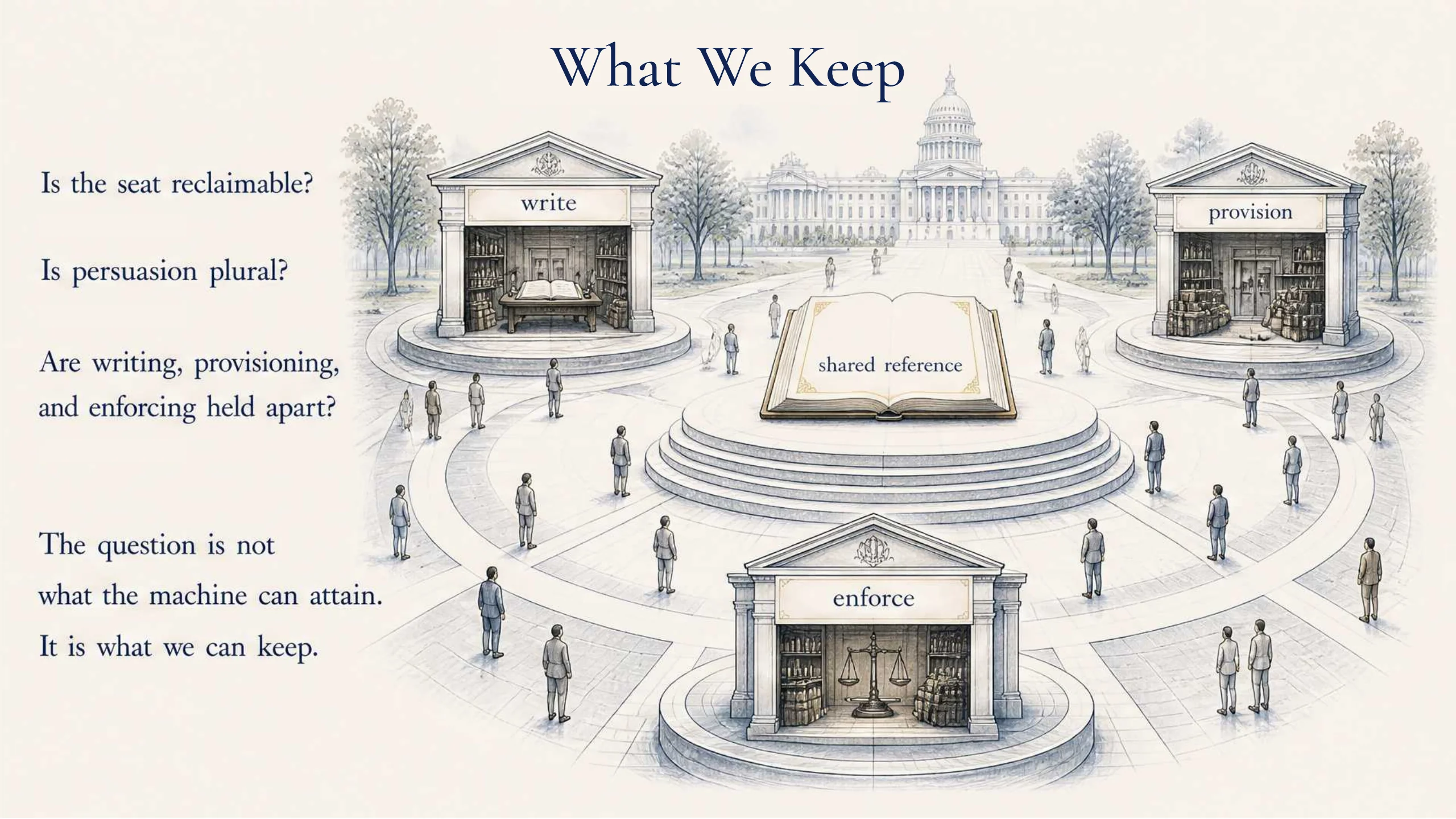
Three questions decide whether a republic survives its own age. Is the seat reclaimable, or has it frozen beyond reach? Is persuasion plural, or does one voice write the reference itself? Are writing, provisioning, and enforcing still held apart, in different hands?
The intelligence age can answer all three the wrong way at once, a single benevolent system, ruling better than we could, that quietly fuses what liberty separated. A republic survives wrong rule. What it cannot survive is the passing of its seat to a keeper it can never outlast. The question is not what the machine can attain. It is what we can keep.